Introducing Ridecell SpendBench: An AI Benchmark Built for Asset Spend
Generic leaderboards can’t tell you whether a model can read a work authorization. So we built a benchmark that can.
Every asset repair comes with paperwork: a work authorization, an invoice, a damage report. Before any money moves, someone has to read it, check it against the rules, and decide whether to approve it. It’s careful, detailed work, and it’s where AI can help teams most, but only if the model is actually good at it.
That’s harder to know than it sounds. Public AI leaderboards measure general knowledge, math and coding. They don’t tell you whether a model can pull the right numbers off a scanned work authorization, or apply a contract rule the same way on Tuesday as it did on Monday. Choosing a model from a generic ranking is a bit like hiring a mechanic based on a spelling test.
So we built our own: Ridecell SpendBench.
Two skills that matter
SpendBench tests leading open-source AI models on the two things asset spend work actually needs.
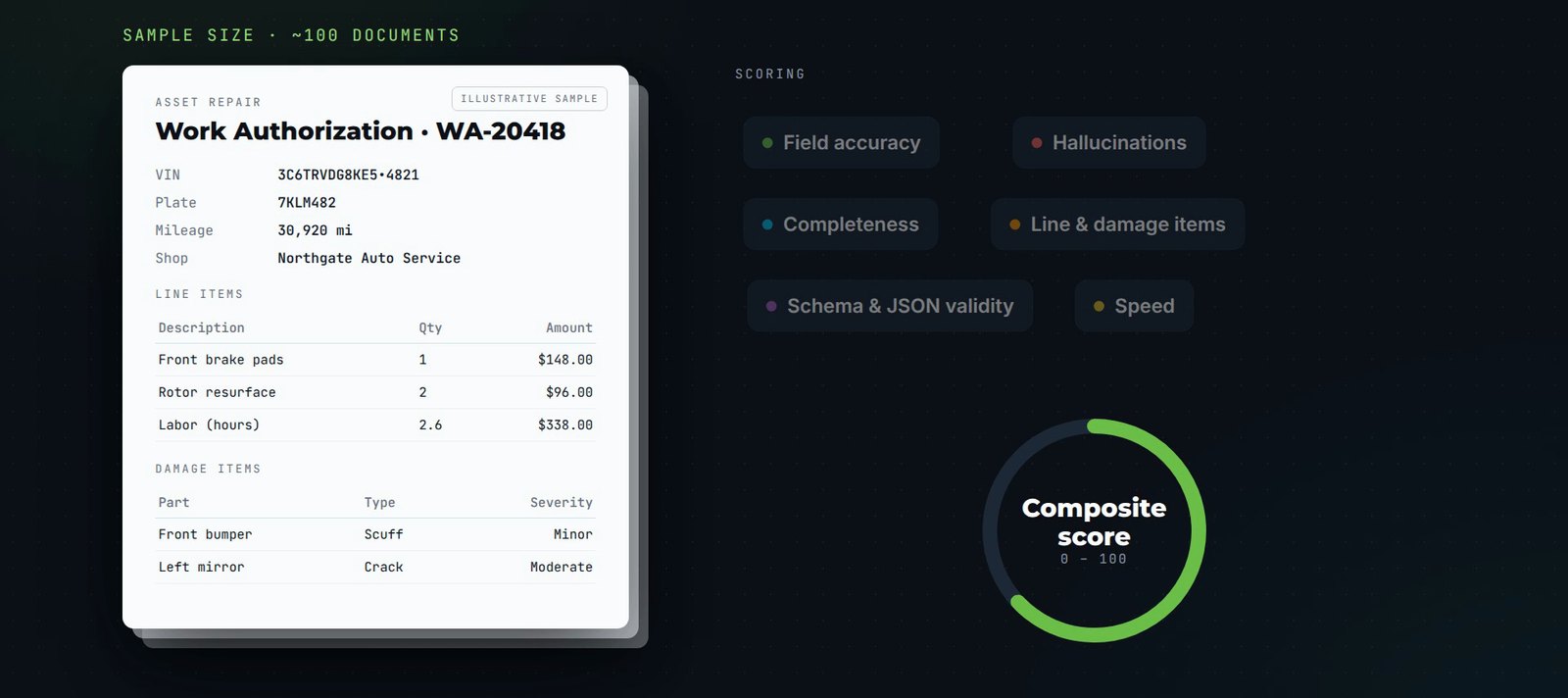
Vision: can the model read the document? Each model reads the same set of real work authorizations and extracts every field, from asset details to line items, amounts and damage. We score field accuracy, hallucinations, completeness and speed, and combine them into one composite score.
Judgment: can the model make the right call? The model acts as an expert analyst. It checks each document against the rules, approves or rejects it, and explains why. We measure how often it’s right, how often it wrongly approves, and how often it gives the same answer when asked again.
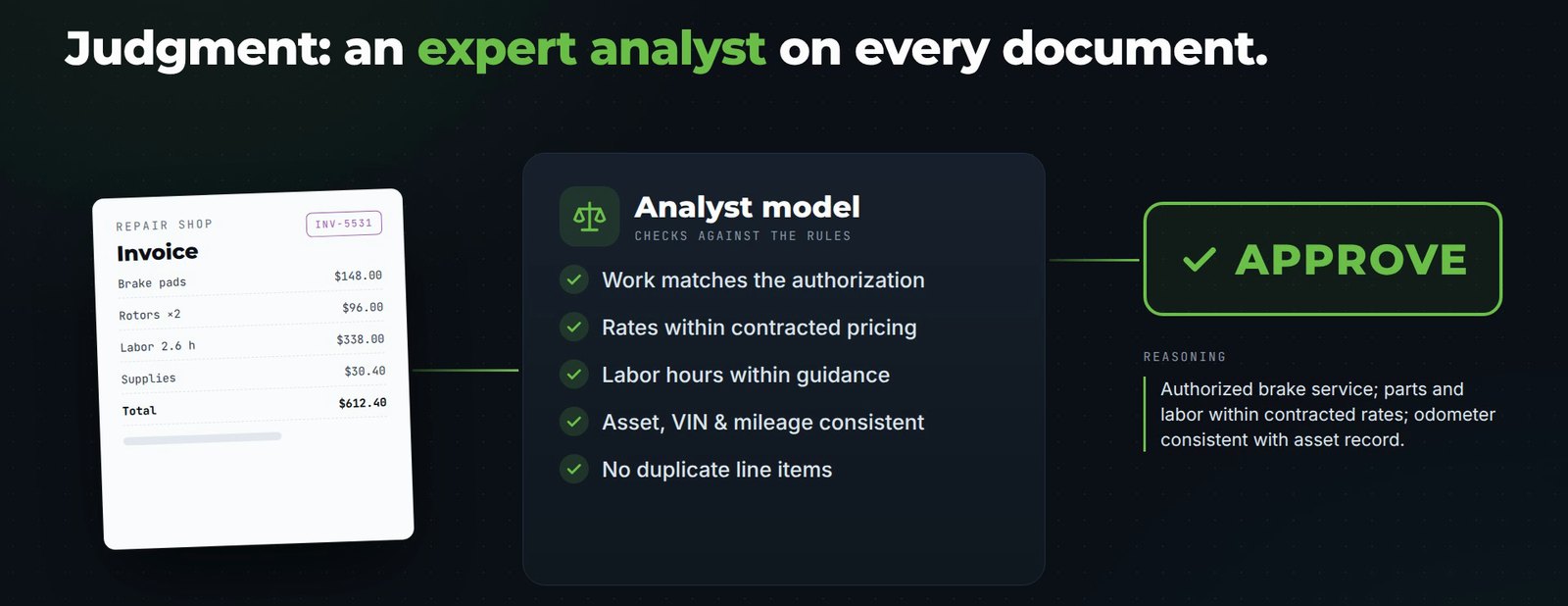
That last point matters more than people expect. A model that’s right most of the time but changes its mind between runs is hard to trust with money.
How we keep it fair
- Real documentsA sample of about a hundred actual work authorizations, not synthetic test cases.
- One machine for every modelEvery model runs on the same single NVIDIA GH200 with 96 GB of VRAM, so we compare models on equal footing and see what they cost to run in practice.
- Open-source, self-hostable modelsDocuments can stay in a controlled environment.
- Repeat runsWe test consistency, not just a single lucky answer.
What it means for our customers
SpendBench is how we choose the models behind Ridecell’s AI. The goal isn’t to take people out of the process. It’s to let clean documents move quickly while the exceptions go to your team with the evidence already attached, so the people who know your operation spend their time on the decisions that need them.
A snapshot, not a final word
Open-source models are improving remarkably fast. A model that leads today may be overtaken in a few months. So SpendBench is a living benchmark: we’ll re-run it frequently as new models arrive, and revisit the models behind Ridecell’s AI whenever the results point to something better.
Because the right model for asset spend shouldn’t be picked from a generic leaderboard. It should be measured on the work itself.
Watch the two-minute SpendBench walkthrough to see how it works.